
Warehouse Management Software
A warehouse management system (WMS): real-time inbound, outbound and stock tracking, bin-level location control, lot and expiry-driven picking, cycle counting and stock alerts.
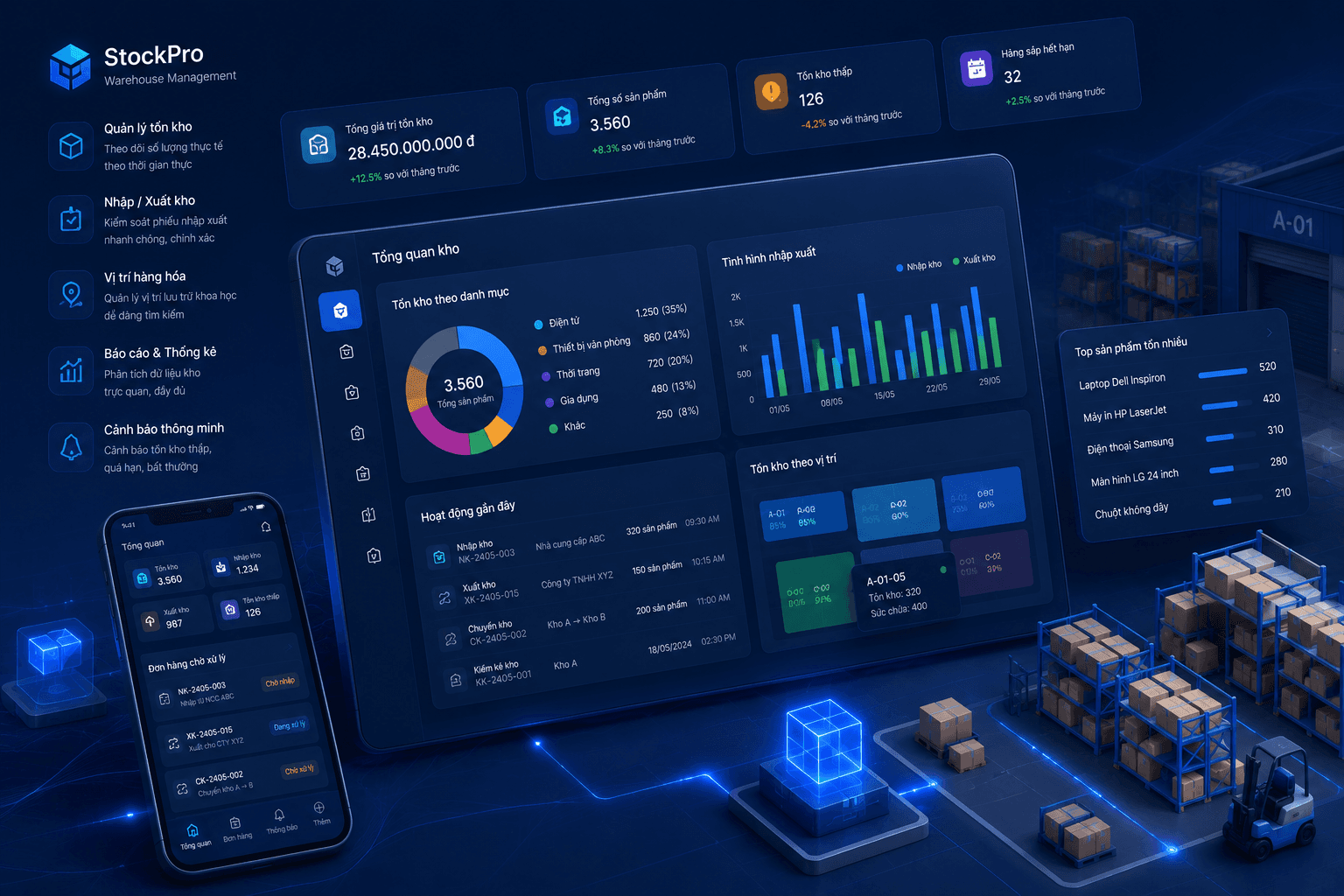
A warehouse management system (WMS) built for a warehousing operator: from receiving goods, putting them away by location, picking and shipping, through to stocktaking and settling service fees with each cargo owner. Every floor operation is confirmed by a barcode scan, replacing handwritten logs re-keyed into Excel at the end of the day.
System overview
The software follows the physical flow of goods through the warehouse:
Receiving → Counting & put in stock → Putaway by location → Picking → Packing & dispatch → Stocktaking & settlement
Each step maps to an explicit document status (Expected → Received → Put away → Allocated → Picked → Shipped), so floor staff, the warehouse keeper, accounting and the cargo owner all see the same stock figure at the same moment.
Data is organised as Cargo owner → Warehouse → Zone / aisle / rack / bin → SKU & Lot → Stock on hand by location, so "how much is left, where is it, which lot" is answered in seconds.
Key features
Warehouse structure & master data
- Multi-level warehouse map: warehouse → zone → aisle → rack → level → bin, each location with its own code and barcode label.
- Functional zones: receiving, storage, picking, damaged and returned goods, staging for dispatch.
- SKU master data: packaging, unit conversions (case – pack – piece), weight, volume, storage conditions, and whether lots and expiry dates are tracked.
- Runs multiple warehouses and multiple cargo owners on one system, with stock kept strictly separate per owner.
Receiving & putaway
- Inbound plans (advance shipping notices) from suppliers or cargo owners, so the team knows the day's volume in advance.
- Physical counting on receipt: quantity, packaging, condition and expiry checks; discrepancies logged with photos.
- Lot numbers generated and barcode labels printed for each carton or pallet right at the dock.
- Suggested putaway locations based on the appropriate zone, remaining capacity and item turnover — fast movers close to the picking area, slow movers pushed further back.
- Putaway confirmed by scanning the location code: scan the wrong bin and the system stops you on the spot.
- Inbound from any source: purchases, customer returns, inter-warehouse transfers, goods back from processing.
Storage & stock control
- Real-time stock by SKU, lot, expiry date, location and cargo owner.
- Two-way lot traceability — from an inbound lot to every customer it went to, and from a shipment back to its lot, receipt date and supplier.
- Explicit stock states: available / allocated / on hold / damaged / awaiting supplier return.
- Internal moves, bin consolidation and rack merging to free up empty locations.
- Alerts for minimum and maximum stock levels, slow-moving items and items nearing expiry against a configurable threshold.
- Fill-rate tracking per zone and per rack, so you know how much more the warehouse can take in.
Picking & dispatch
- Outbound orders for sales, cargo-owner requests, transfers, supplier returns or write-offs.
- Stock allocated the moment the order is created, so two orders never draw down the same lot only to come up short at picking time.
- Automatic lot selection by FIFO / FEFO (oldest receipt or nearest expiry first), with manual lot override when a customer requires it.
- Pick lists sequenced along the warehouse walking path, with multiple orders grouped into a single pick run to cut walking distance.
- Picking, packing and handover confirmed by barcode scan; a wrong SKU or wrong lot raises an error immediately.
- Prints goods-issue notes, delivery notes and carton labels on the company's own templates.
Stocktaking
- Cycle counting by zone or product group — no need to shut the warehouse down.
- Full periodic counts with count sheets assigned to individual staff.
- Counts entered on handheld scanners, with blind counting (book quantity hidden) for objective figures.
- Book-versus-physical variance reports with root-cause notes and a tiered approval flow for adjustments.
- Complete adjustment history: who adjusted, how much, why, and the supporting document.
Floor app & barcoding
- A handheld scanner / mobile app covering every floor task: receiving, putaway, picking, counting.
- Barcode / QR labels for SKUs, lots, cartons and storage locations.
- Works through patchy warehouse wifi: operations are buffered locally and sync automatically once back online.
Warehousing services & owner settlement
- Storage contracts per cargo owner: rates by pallet / m² / m³, charged daily or per period.
- Storage fees calculated on actual stock held and handling fees per inbound and outbound movement, plus ad-hoc charges.
- Periodic service statements and receivables tracking per cargo owner.
- A dedicated portal for each cargo owner to view their own stock and movement history — and nothing belonging to anyone else.
Reporting & analytics
- Inbound – outbound – on-hand reports by period, warehouse, cargo owner and product group.
- Detailed stock cards per SKU and lot-level ledgers.
- Stock ageing, inventory turnover, slow-moving and near-expiry listings.
- Operational productivity: pick lines per hour, documents processed per shift and per employee.
- A real-time overview dashboard; every report exports to Excel.
Integrations
- APIs to sync orders and stock levels with the cargo owner's sales system or ERP.
- Connects to transport software to hand over shipment details as soon as goods leave the warehouse.
- Bulk Excel import for product master data, opening stock and inbound/outbound documents.
Permissions & internal control
- Fine-grained permissions per function × action (view / create / edit / delete).
- Data scope limited by assigned warehouse and assigned cargo owner.
- Approval flows for sensitive operations: stock adjustments, write-offs, edits to closed documents.
- A full activity log for tracing every stock discrepancy back to its source.
Stock accuracy — the most expensive problem in a warehouse
A warehousing operator's real cost is not the software; it is goods nobody can find, wrong lots shipped, and book stock that no longer matches the shelf. The system attacks all three leaks directly:
- Wrong item, wrong lot — every pick and dispatch requires scanning both the item and the location, so mistakes are blocked on the floor instead of surfacing as a customer complaint.
- Phantom stock from late paperwork — stock updates at the moment of the scan, closing the gap between "goods have left" and "the document has been keyed in".
- Time lost searching — every SKU always has a known location, so a new hire can pick without asking a veteran.
The payoff shows up in the count variance and picking productivity reports — you know exactly which zone keeps drifting and which shift is running slow.
Who uses it
- Receiving staff — count, book in, print lot labels and put away at the suggested location.
- Pickers — take pick lists on a handheld and collect goods along the optimised route.
- Warehouse keepers / supervisors — monitor stock by location, assign staff, resolve count variances.
- Warehouse accountants — reconcile inbound, outbound and on-hand figures, approve adjustments, issue service statements.
- Account staff — look up stock and transaction history to answer cargo owners.
- Management — dashboards, stock ageing, turnover and operational productivity reports.
Highlights
- Bin-level control — you know exactly which SKU sits in which location and which lot it belongs to.
- Smart putaway and picking guidance — driven by capacity, turnover and the walking path through the warehouse.
- Automatic FIFO / FEFO — the system picks the lot by rule, not by whichever bin is closest to hand.
- Counting without closing — cycle counts run zone by zone while the warehouse keeps receiving and shipping.
- True multi-owner separation — stock, paperwork and service fees kept independent per cargo owner.
- Barcode-enforced control — wrong moves blocked on the spot, with a complete audit trail.
The system was built around the customer's real warehouse operations and continues to expand as volumes and the number of cargo owners grow.
Other projects
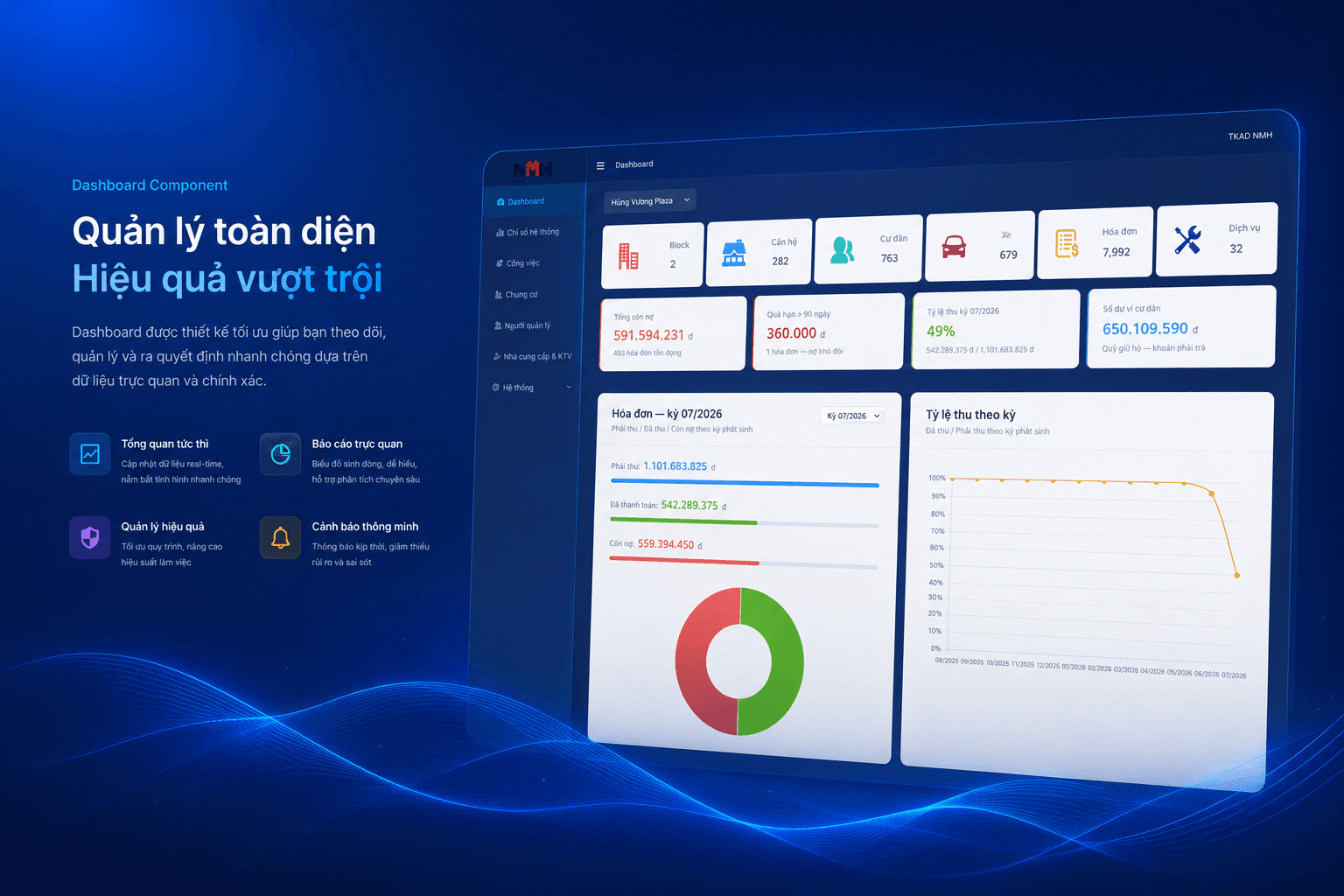
Condominium Management Software
A multi-project condominium operations platform: billing and finance, residents, services and community engagement in one system.
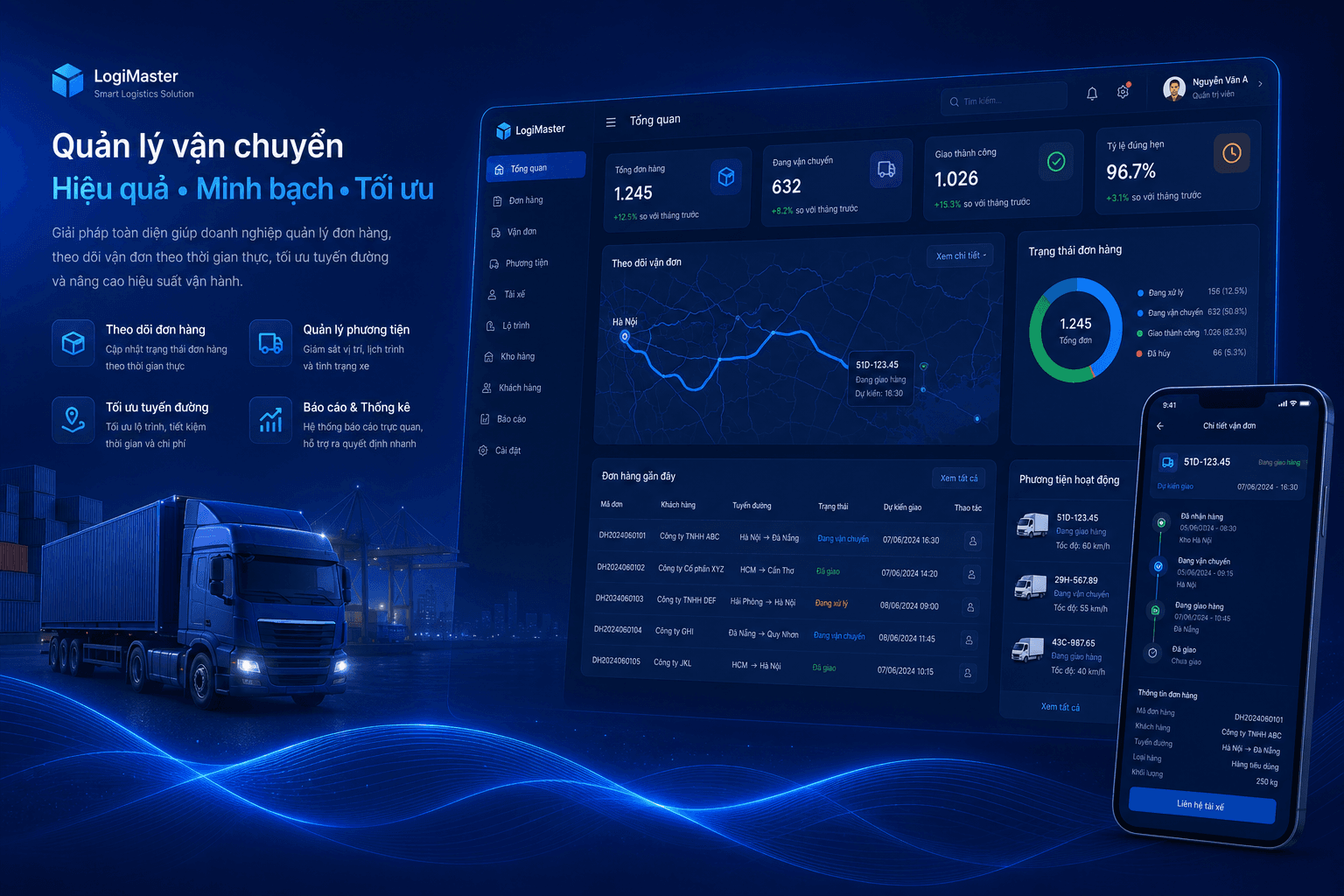
Logistics Software
A transport management system (TMS): order creation, load consolidation and vehicle planning by weight and route, real-time shipment tracking, fleet and driver management, and revenue reporting.
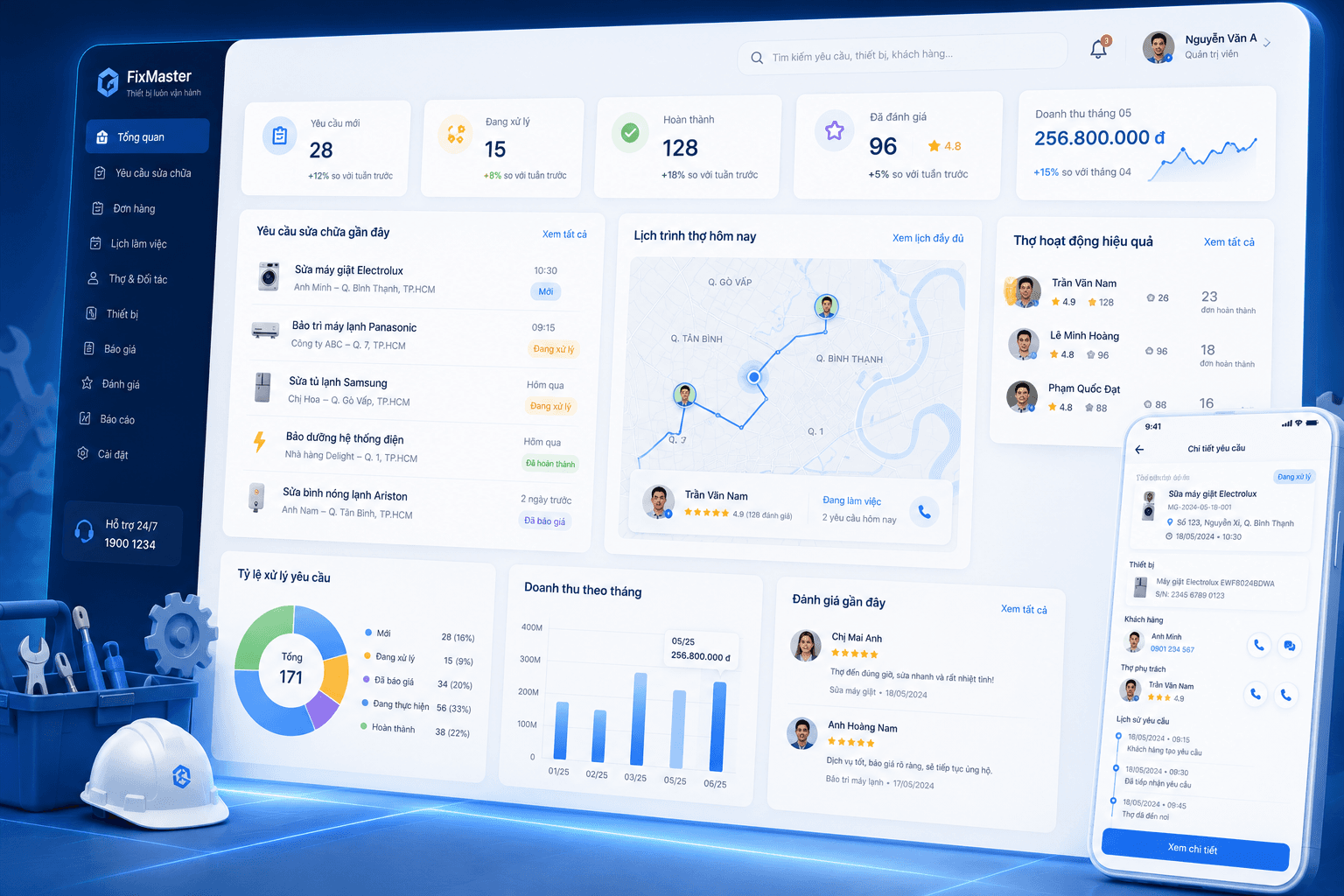
Home Service Software
Home repair service management software: request intake, technician dispatch by schedule and location, quotations, customer ratings and revenue reports.
Ready to work together?
Tell us about your problem. We will advise on a solution and quote it free of charge.