
Logistics Software
A transport management system (TMS): order creation, load consolidation and vehicle planning by weight and route, real-time shipment tracking, fleet and driver management, and revenue reporting.
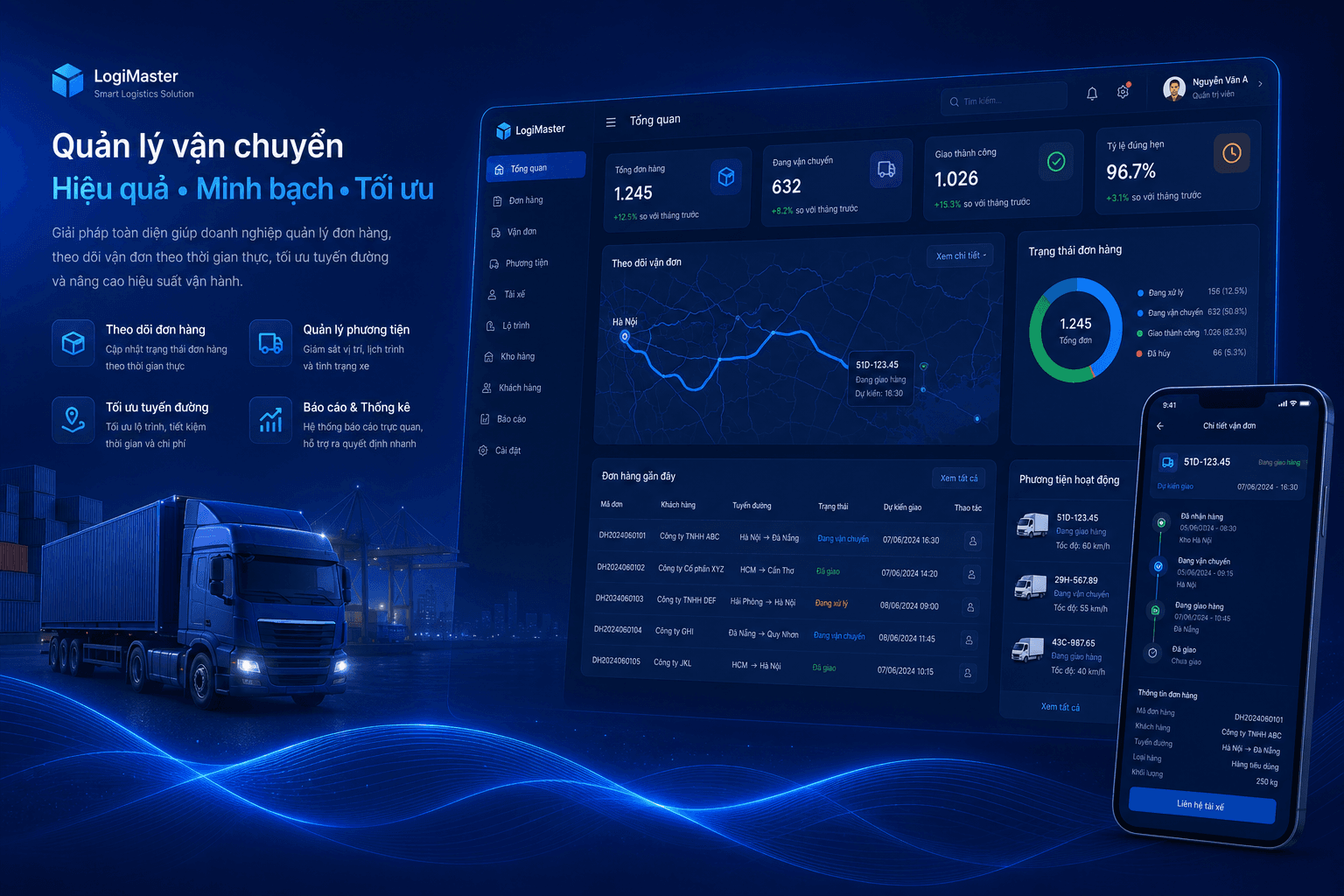
A Transportation Management System (TMS) for road freight carriers — covering the full lifecycle from taking customer orders, consolidating loads and planning vehicles, warehouse dispatch, through to successful delivery and revenue and receivables reconciliation. One platform replaces the usual mix of spreadsheets and phone calls.
System overview
The software follows the way a freight company actually operates:
Order intake → Load consolidation & vehicle planning → Dispatch → In transit → Delivered → Revenue reconciliation
Every step maps to an explicit shipment status (New → Dispatched → In transit → Delivered), so dispatchers, drivers, accountants and customers all see the same status at the same time.
Data follows a single model — Customer → Shipment → Trip → Vehicle & Driver — with a region / lane dimension, so every revenue and performance figure rolls up to the right scope.
Key features
Orders & shipments
- Create and manage shipments: waybill number, sender and receiver, origin and destination warehouses, origin and destination provinces.
- Flexible freight rating by weight (KG), volume (M³) or full truckload.
- Shipment splitting — one large order spread across several vehicles or trips, with charges split proportionally; splits can be reversed and merged back.
- Assign a sales owner and a support agent to each shipment.
- Bulk data entry and fast lookup by waybill, customer, lane or status.
- Track goods waiting in the warehouse for their next trip.
Load consolidation & daily vehicle planning
This is the heart of the system — where a day's operating efficiency is decided:
- A drag-and-drop daily planning board: drag waiting shipments onto a vehicle, reorder them, move them to another vehicle or take them off.
- Automatic load suggestion — the system fills remaining capacity with the leftover shipments while keeping every manually placed order untouched, so the dispatcher stays in control.
- Hard constraints on each truck's payload (KG) and volume (M³), with automatic full-load flagging.
- Preference for consolidating shipments on the same lane and delivery region onto one vehicle to cut empty running.
- Automatic stop sequencing along the geographic order of the lane, so drivers run one clean direction.
- Explicit warnings for shipments that could not be loaded for lack of capacity, so you can add a vehicle or roll them to the next trip.
- Multiple saved plan versions per day, with history so you can compare alternative loading plans.
Trips, dispatch & operations
- Manage outbound trips and inbound trips day by day.
- Warehouse dispatch with mandatory validation before a trip is confirmed: waybill number, driver, origin province, destination province and freight rate — the system names any missing field, preventing errors that would only surface on the road.
- Generate dispatch notes and cargo manifests in the company's standard formats.
- Swap the vehicle for a whole trip when a truck breaks down.
- A consolidated dispatch schedule by date and trip status.
Tracking & proof of delivery
- Real-time shipment tracking with push notifications on every status change.
- Journey updates carrying location, timestamp, notes and on-site photos at each leg.
- Proof of delivery: handover photos, recipient name and delivery time.
- A complete audit trail per shipment: who updated what, and when.
Fleet & driver management
- Fleet records: plate number, payload, body volume, availability status.
- Driver profiles and driver assignment per trip.
- Productivity and revenue tracking per vehicle.
Customers, revenue & receivables
- Customer management, sender and receiver details, bulk customer import from Excel.
- Reports on company revenue, revenue by customer, revenue by vehicle and revenue by employee.
- New-customer statistics and side-by-side performance comparison between sales staff.
- Accounts receivable tracking per customer.
- An overview dashboard by date range and by region.
Reporting & document templates
- Excel exports for the operational document set: shipment details, cargo manifests, accounting statements, dispatch notes, detailed revenue, revenue by vehicle, customer lists.
- Reports filtered by date, lane, region, customer, employee or vehicle.
Permissions & control
- Fine-grained permissions per feature × action (view / add / edit / delete).
- Roles, departments and assigned regions — staff only see data within their own scope.
- An activity log recording every significant action for dispute resolution and audit.
Filling every truck — more profit per trip
A carrier's margin comes from running each truck full and in one direction. The system attacks the three biggest sources of cost leakage:
- Under-loaded trips — KG and M³ are tracked together, and remaining capacity per truck is shown so dispatchers know exactly how much more cargo they can still take.
- Backtracking and overlapping lanes — shipments in the same delivery region are grouped onto one vehicle and stops are sequenced along the lane.
- Forgotten shipments — anything that could not be loaded is flagged with the reason, so nothing quietly drops out of the plan.
The outcome is measured by the revenue-by-vehicle report — showing precisely which trucks are profitable and which lanes need restructuring.
Who uses it
- Dispatchers — consolidate loads, plan vehicles, confirm the daily run and handle exceptions.
- Warehouse staff — dispatch goods, print notes and manifests, reconcile against physical cargo.
- Drivers — accept trips, update the journey and upload delivery photos.
- Sales staff — manage customers, create shipments, follow their own revenue.
- Accountants — reconcile freight charges, revenue and customer receivables.
- Management — dashboards and revenue reports by vehicle, lane and employee.
Highlights
- Smart consolidation — automatic load suggestions based on payload, volume and lane, while respecting the dispatcher's manual decisions.
- Flexible shipment splitting — one large order across several vehicles, with charges split pro rata.
- Transparent journeys — real-time status with photos and a full update history.
- Safe trip confirmation — mandatory validation before dispatch, cutting paperwork errors.
- Decision-grade numbers — revenue broken down per vehicle, per lane and per employee.
- Tight internal control — permissions by feature and region, backed by an activity log.
The system was built around a freight company's real operating process and continues to expand as the client's operations grow.
Other projects
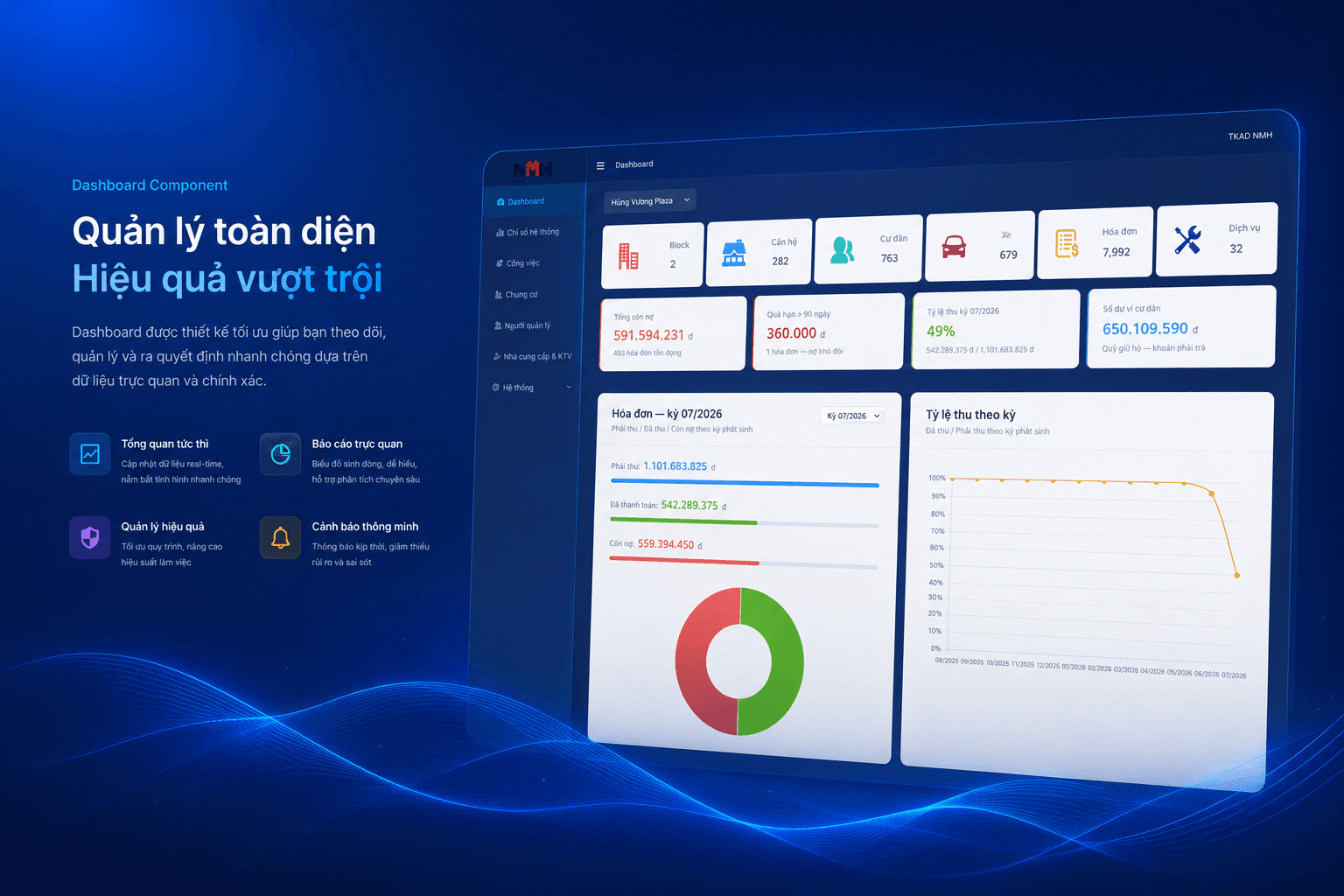
Condominium Management Software
A multi-project condominium operations platform: billing and finance, residents, services and community engagement in one system.
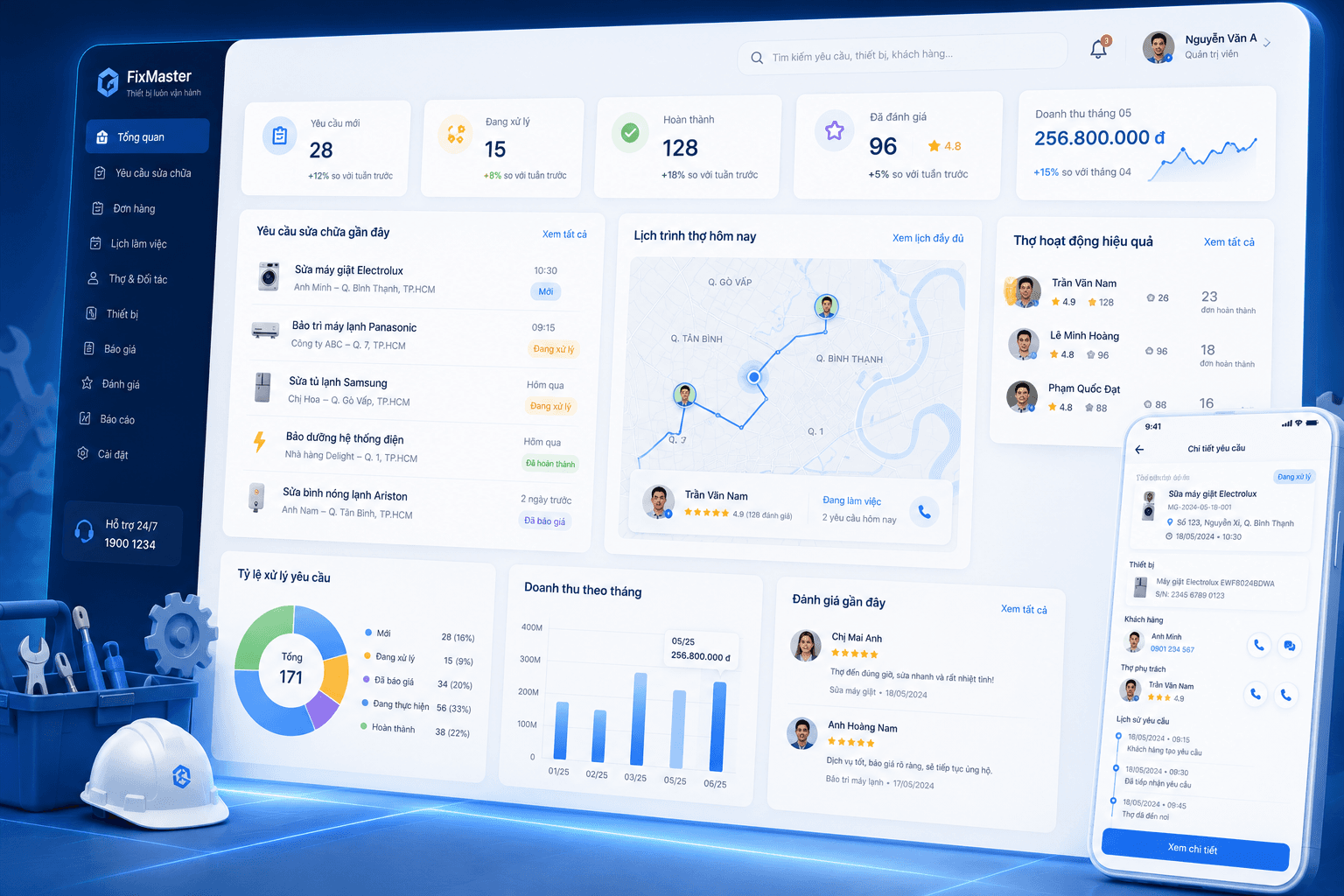
Home Service Software
Home repair service management software: request intake, technician dispatch by schedule and location, quotations, customer ratings and revenue reports.
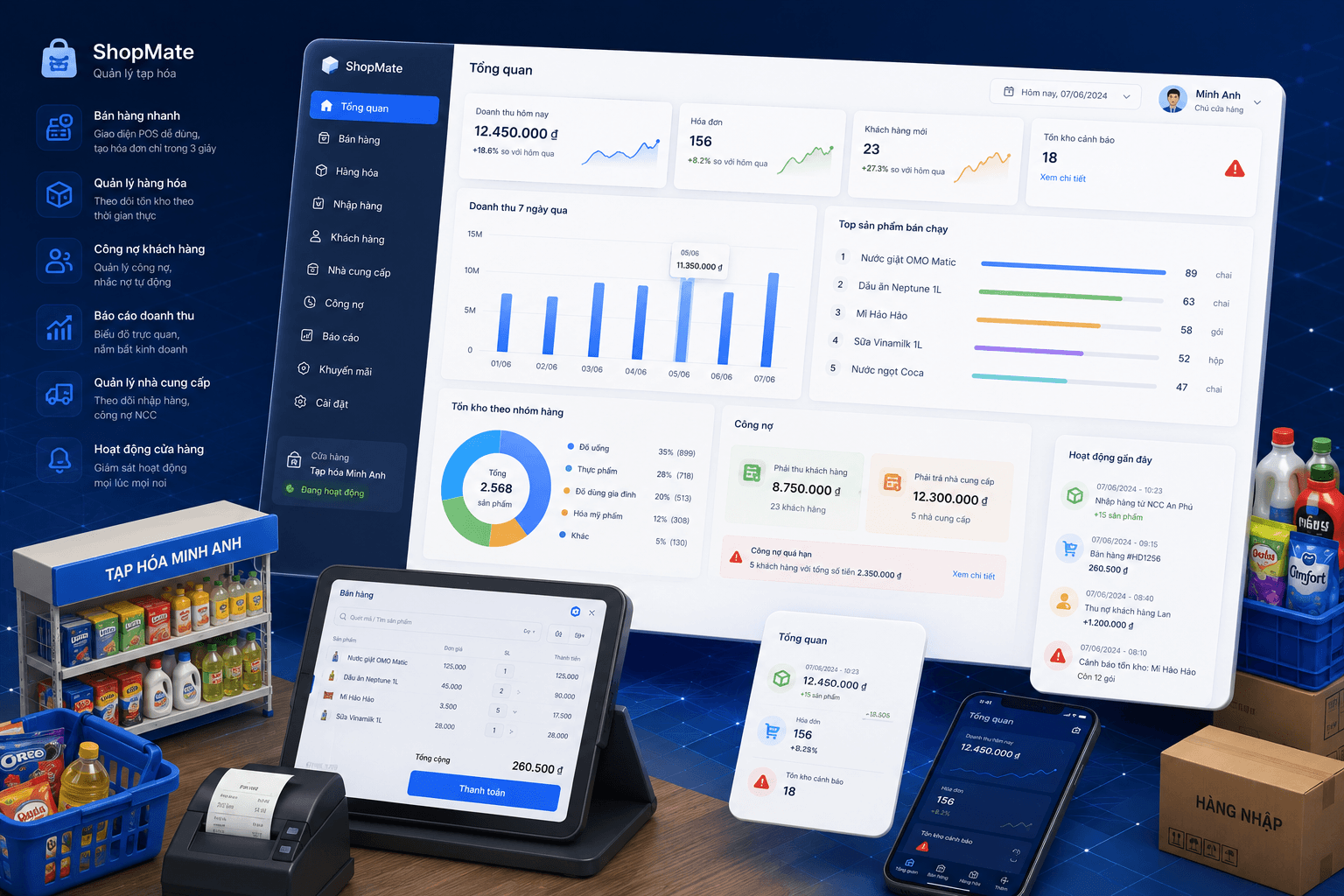
Grocery Store Management Software
Grocery store management software covering point of sale, product and inventory management, purchasing, debt tracking and revenue reports in one unified system.
Ready to work together?
Tell us about your problem. We will advise on a solution and quote it free of charge.